
Life insurers test for cotinine, and a positive result usually moves your application into tobacco-rate pricing. Detection windows and carrier cutoffs vary by sample type, but the outcome mostly comes down to two things: what the lab confirms and which carrier you apply with. Honest disclosure, smart timing, and comparing carriers are the levers you actually control.
TL;DR:
- Carrier thresholds for cotinine and anabasine vary, influencing whether a positive test results in higher premiums or tailored rate classes.
- A positive nicotine test usually leads to a tobacco rate, which is two to three times more expensive, especially if the applicant has not been nicotine-free for the required period.
- The detection window for nicotine depends on sample type and usage frequency, with urine tests detecting up to four days and hair tests up to 90 days.
- Disclosing all nicotine sources upfront, including patches and vaping, and timing application after a clean period can significantly reduce the chance of being classified as a tobacco user.
- Shopping multiple carriers can help find options with shorter lookback windows, especially for recent quitters or those with complex nicotine histories.
Table of Contents
- How Life Insurance Labs Test for Nicotine: Cotinine, Anabasine, and Lab Confirmation
- Urine, Blood, Saliva, or Hair: How Long Does Nicotine Stay Detectable?
- What Counts as Nicotine Use: Vapes, NRT, Smokeless Tobacco, and Secondhand Smoke
- How Tobacco Use Changes Your Life Insurance Rate Class
- Preparing for Your Exam: Disclosure, Timing, and What Doesn't Work
- Testing Positive: Disputes, Retesting, and Reclassification Later
- How DG Life Group Helps After a Nicotine Test Surprise
- What the Data Actually Tells Applicants
- Get Matched With a Carrier That Fits Your Nicotine History
- Sources
- FAQ
How Life Insurance Labs Test for Nicotine: Cotinine, Anabasine, and Lab Confirmation
Cotinine is what shows up on the report. It's the primary metabolite your body produces when it breaks down nicotine, and it's the standard screening target for every major insurance lab. Anabasine is the second marker, and it plays a narrower but important role: it appears in tobacco-plant products but not in nicotine replacement therapy or synthetic nicotine, so it helps labs tell a vape or cigarette habit apart from a nicotine patch.
The testing process runs in two stages. Labs first screen samples with an immunoassay, a fast, low-cost test that flags anything above a set threshold. Anything that screens positive typically gets confirmed with GC/MS or LC/MS/MS, lab methods precise enough to rule out false positives before an underwriter ever sees the result.
Where it gets complicated is the cutoff itself. There's no single industry standard.
- Urine cutoffs commonly run within a range that some carriers are lowering to catch more marginal cases.
- Cutoff choice directly trades sensitivity for false positives: a lower threshold catches more actual tobacco users but also flags more secondhand exposure.
Statistic Callout: Clinical Reference Laboratories has documented that applicants who deny tobacco use but test cotinine-positive carry mortality rates nearly identical to admitted smokers. That's why carriers trust the lab result over the application form when the two disagree.
Urine, Blood, Saliva, or Hair: How Long Does Nicotine Stay Detectable?
The sample type your exam uses determines how far back the test can see. A cigarette from three days ago might clear a saliva test but still show up in urine, so it's worth knowing what each method actually catches.
| Sample type | Typical use case | Approximate detection window | Notes |
|---|---|---|---|
| Urine | Standard exam-based underwriting | Up to 3 to 4 days for occasional use, longer for daily users | Most common method; cutoffs often set higher than other sample types |
| Blood/serum | Higher face-amount or jumbo policies | 1 to 3 days, sometimes longer | Cutoffs in research settings run lower, sometimes single-digit ng/mL |
| Saliva | Rapid screening, some paramedical exams | 1 to 4 days | Cutoffs commonly run within a range |
| Hair | Rare, mostly jumbo or contested cases | Up to 90 days | Reflects long-term pattern rather than recent use |
A PMC literature review compiling cutoff data across sample types found meaningful variation even within the same test method, since studies use different statistical approaches to set thresholds. Heavier, more frequent nicotine use extends every one of these windows. A daily pack-a-day smoker clears cotinine far slower than someone who vaped once at a party three days before their exam.
What Counts as Nicotine Use: Vapes, NRT, Smokeless Tobacco, and Secondhand Smoke
Here's the part that trips up a lot of applicants: cotinine doesn't know the difference between a cigarette and a nicotine patch. Every nicotine source metabolizes into cotinine, so vaping, gum, patches, and nicotine pouches all show up the same way on a basic cotinine screen.
- Anabasine is the marker that separates tobacco-plant products from nicotine replacement therapy or synthetic nicotine, since NRT and synthetics don't contain it.
- Secondhand smoke exposure almost never pushes cotinine above standard carrier cutoffs. Though extreme, constant exposure is a rare exception worth disclosing if it applies to you.
- In no-exam underwriting, pharmacy benefit manager records can flag a filled prescription for a nicotine patch or cessation drug even without a lab sample.
If you use smokeless tobacco or synthetic nicotine pouches, the anabasine result matters more than the cotinine number, since it's the piece of evidence that actually tells the underwriter what product you're using.
How Tobacco Use Changes Your Life Insurance Rate Class
A positive nicotine test rarely denies coverage outright. What it does is move you into a different, more expensive pricing tier, and the gap between tiers is bigger than most applicants expect.
- Tobacco-rated term policies commonly cost two to three times more than non-tobacco rates for a comparable applicant, depending on age and health.
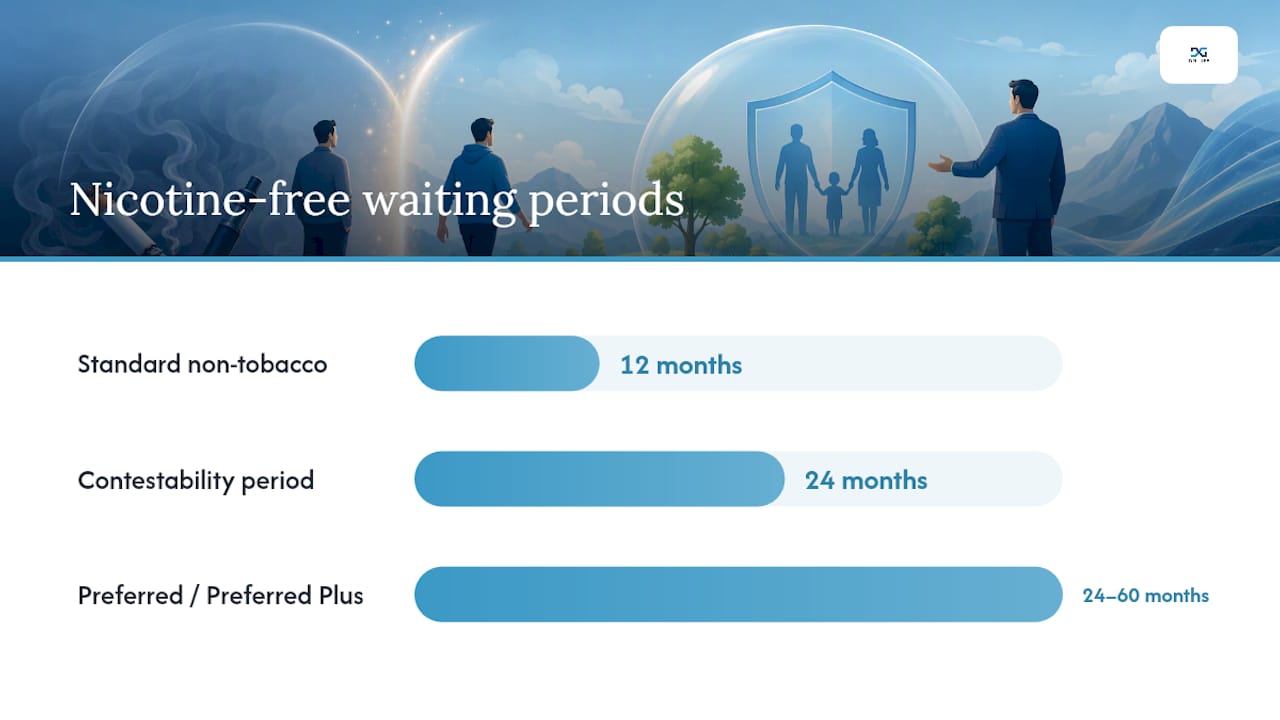
- Most carriers require 12 months of nicotine-free status for standard non-tobacco rates, but Preferred and Preferred Plus tiers often demand longer, sometimes 24 to 60 months.
- Not every carrier offers an intermediate "Preferred tobacco" tier, which is exactly why the price you're quoted can swing wildly from one insurer to the next for the identical applicant.
- Nondisclosure discovered during the contestability period, typically the first two years, can lead to a rated offer, a rescinded policy, or a denied claim.
Pro Tip: If you quit nicotine within the last year, don't assume every carrier treats you the same. Some will quote you standard rates at 12 months clean; others hold you to tobacco pricing until you hit 24 months. Shopping multiple carriers before you apply can be worth thousands over the life of a policy.
The reason carriers lean so heavily on lab results instead of the application questionnaire comes back to mortality data. CDC research on tobacco's health effects backs the actuarial logic insurers use to separate tobacco users into their own pricing pool in the first place.
Preparing for Your Exam: Disclosure, Timing, and What Doesn't Work
The single biggest mistake applicants make isn't testing positive. It's testing positive after saying they don't use nicotine.
- Disclose every nicotine source, including patches, gum, and vape pens, even if you consider yourself a light or occasional user. A mismatch between your answers and the lab or pharmacy record is what triggers scrutiny.
- Skip the detox kits and dilution tricks. Extreme water-loading or "cleanse" products rarely beat a confirmatory GC/MS test, and diluted samples often get flagged and retested rather than accepted.
- Document your cessation if you recently quit. A filled prescription for a cessation aid or enrollment in a structured quit program gives you paperwork to support a reclassification request later.
- Time your application deliberately. If you're close to a carrier's nicotine-free lookback threshold, waiting a few extra months can shift you into a cheaper rate class entirely.
Testing Positive: Disputes, Retesting, and Reclassification Later
A presumptive positive isn't the final word. You can request the confirmatory GC/MS or LC/MS/MS result and the chain-of-custody paperwork if something about the result doesn't match your history.
- Ask your agent to request a manual underwriter review when there's a mitigating explanation, like secondhand exposure or a prescribed medication.
- Once you've cleared a carrier's required nicotine-free window, documented cessation and a clean retest can support a formal reclassification request.
- Most carriers will reconsider your rate class after that window closes, provided the new lab work backs it up.
How DG Life Group Helps After a Nicotine Test Surprise
Not every applicant needs a lab at all. DG Life Group works with over 30 A-rated carriers, and part of that network includes no-medical-exam options that rely on records rather than a urine or blood draw, which can matter a great deal if you're navigating a recent quit date or a complicated nicotine history.
- We help applicants find carriers whose nicotine-free lookback windows fit their actual timeline, rather than defaulting to generic recommendations.
- Our service includes options for coverage that can pay out while you're still alive if a serious illness hits.
- Coverage decisions may come back quickly, which can be beneficial if you're trying to lock in a rate before a lookback window resets.
If you recently quit, use NRT, or got flagged on a past application, talk to a broker before you apply again anywhere else.
What the Data Actually Tells Applicants
The conventional advice on this topic, "just quit for a year and you're fine," undersells how much carrier variability actually drives your outcome. Two applicants with identical nicotine histories can get wildly different quotes because one carrier's Preferred tier demands five years clean and another's asks for one. That's not a footnote. It's the entire game.
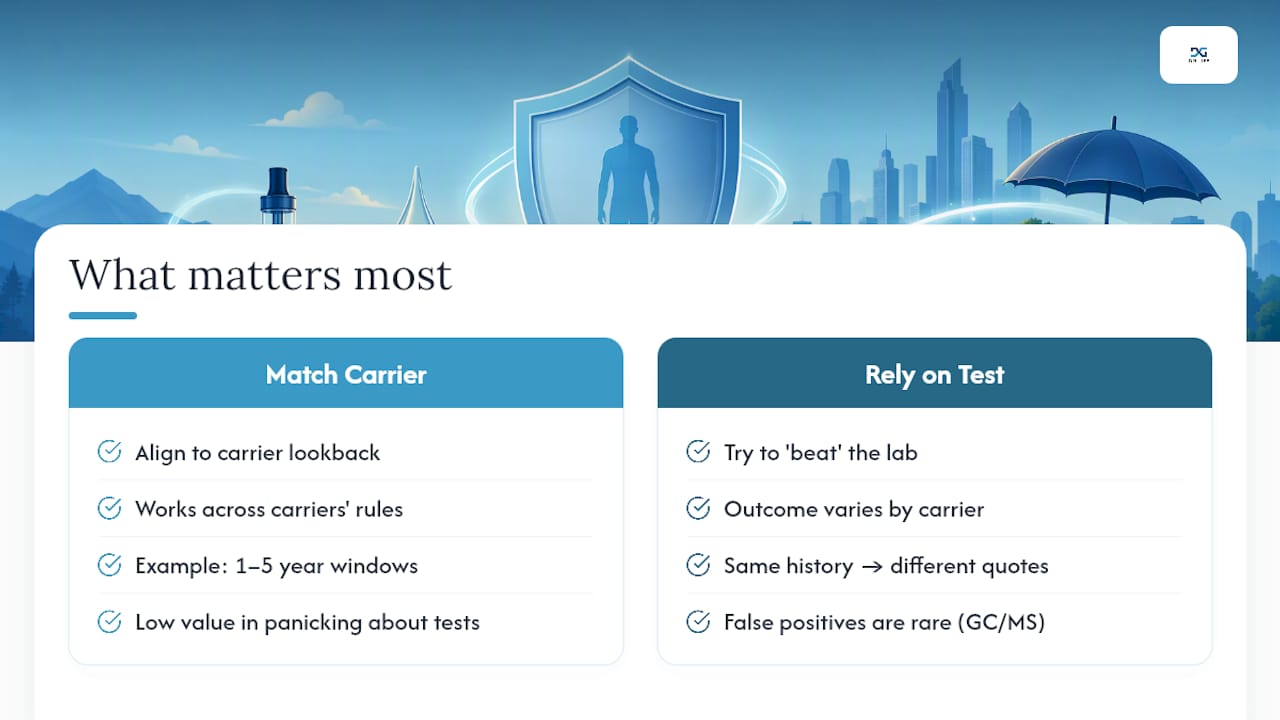
What's overrated is the fear of the test itself. Cotinine and anabasine testing is precise, and confirmatory GC/MS work all but eliminates false positives, so panicking about secondhand smoke ruining your application is largely misplaced. What's underrated is disclosure discipline. The mortality data insurers rely on shows that a lab mismatch against a false "non-user" answer is treated as a much bigger risk signal than tobacco use disclosed upfront.
If you take one thing from this, prioritize matching your timeline to the right carrier's lookback window over trying to game the test itself. That's where the real savings live.
— Dev
Get Matched With a Carrier That Fits Your Nicotine History
If you've read this far, you already know the frustrating part: the same nicotine history can cost you double depending on which carrier reviews your application. That's the exact problem DG Life Group exists to solve. Instead of applying blind to a single insurer's cutoff rules, we shop your situation across more than 30 A-rated carriers to find the lookback window and rate class that actually fits your timeline.
If a recent quit date, vape history, or a past nicotine-related rescission has made traditional underwriting feel like a moving target, our no-medical-exam options skip the lab draw entirely for many applicants. And if your bigger concern is protecting your family financially through a serious illness, not just death benefit, our living benefits coverage lets you access funds while you're still alive. Request a quote today and we'll match you with the carrier most likely to give you the best rate class for your actual history, not a generic one.
Sources
- Cotinine thresholds and mortality — Clinical Reference Laboratories
- Overview of cotinine cutoff values for smoking status classification — PMC (2016)
- CDC — Tobacco
- How life insurers test for nicotine: Cotinine & Anabasine — LegalClarity
FAQ
How Do I Pass a Nicotine Test for Life Insurance?
You can't "beat" a confirmatory lab test with detox kits or dilution. The only reliable path is genuine nicotine cessation for the length of time your target carrier requires, backed by honest disclosure on your application.
Does Nicotine Show Up on a Life Insurance Test?
Yes. Standard exams screen urine, blood, or saliva for cotinine, nicotine's primary metabolite, and confirm any positive result with GC/MS or LC/MS/MS testing.
How Long Do I Need to Be Nicotine-Free for Life Insurance?
Most carriers require 12 months nicotine-free for standard non-tobacco rates, but Preferred tiers often require 24 to 60 months depending on the carrier.
Should I Tell My Life Insurance Company I Use Nicotine?
Yes, always disclose it. A mismatch between your application and lab or pharmacy records during the contestability period can lead to a rated policy, rescission, or a denied claim.
Does Vaping Count as Tobacco Use for Life Insurance?
Yes. Vaping produces cotinine just like cigarettes do, so most carriers rate vapers the same as smokers unless they've cleared the carrier's required nicotine-free period.